
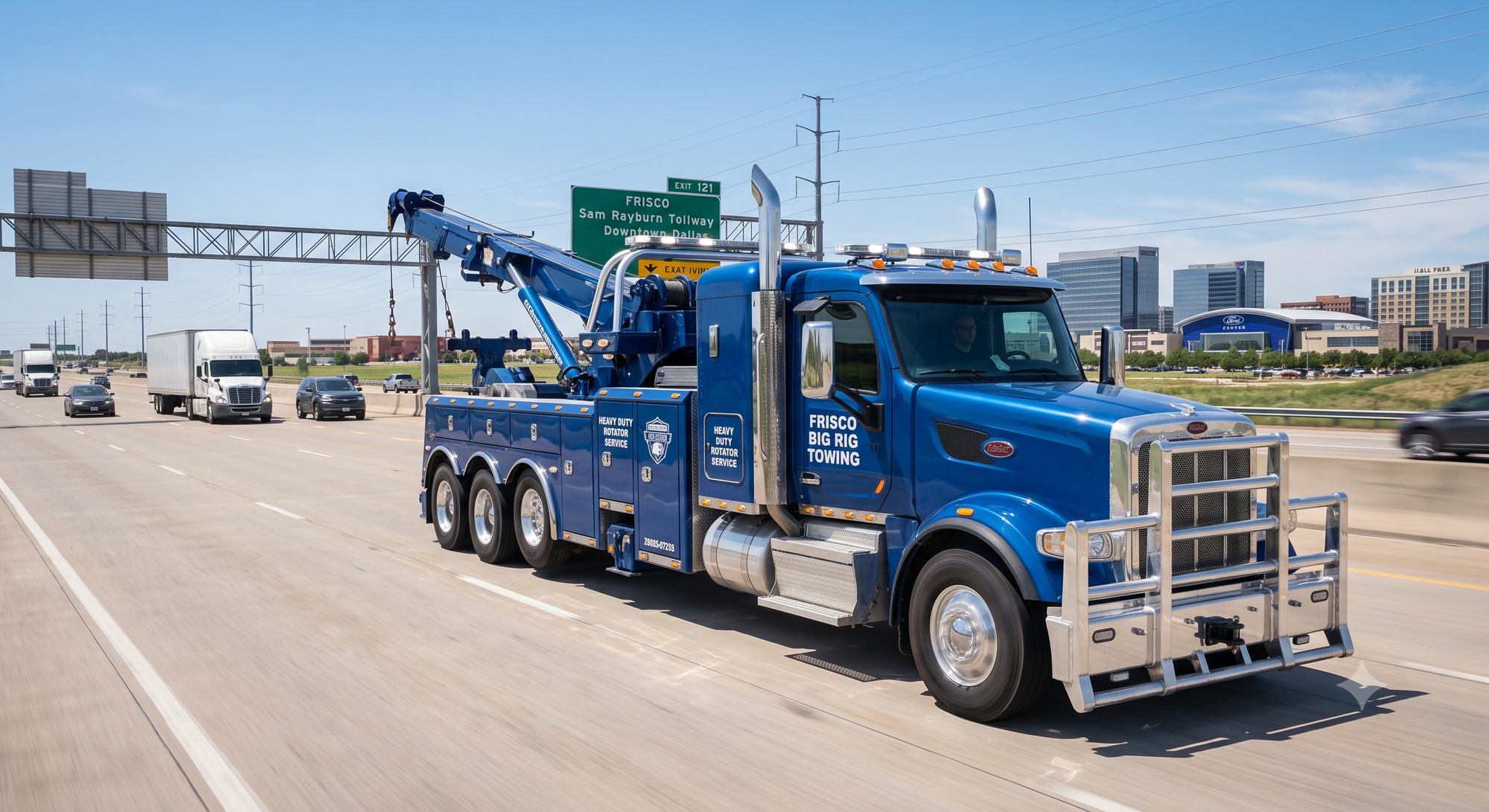
On-hook coverage pays for damage to a vehicle you do not own while it is attached to your truck or riding on your bed. It answers the question every towing customer eventually asks: what happens if you damage my car while you are moving it?
Your auto liability protects other people. Physical damage protects your wrecker. Neither one pays for the customer’s vehicle in your care — and in Texas, the coverage that does is filed under a name most operators find confusing the first time they see it on a quote.
What on-hook coverage actually pays for
On-hook responds when a non-owned vehicle in your custody is damaged while it is hooked, winched, loaded or in transit. The named causes are usually collision, fire, theft, explosion and vandalism — the same list you would expect on a physical damage form, applied to somebody else’s property instead of your own.
Two features of the coverage decide most claims:
- The limit is per occurrence, not per vehicle. A flatbed carrying two cars and dragging a third shares one limit across the whole load.
- “On hook” is close to literal. Coverage generally attaches when the vehicle is connected to or loaded onto your truck and stops when it is unhooked at a yard or a shop. From that moment a different coverage is doing the work.
In Texas, on-hook and garagekeepers trade names
Almost everywhere in the country, on-hook covers the vehicle in tow and garagekeepers covers the vehicle sitting on your lot. Texas — along with Virginia — inverts it. The in-tow exposure is commonly written as Garagekeepers Legal Liability, and the coverage for vehicles stored at your location is written as Storage Location.
This is not a technicality. An operator comparing a Texas quote against an out-of-state quote can decide he is missing a coverage he already has, or buy the same exposure twice under two names. When you read a towing quote in Texas, read the coverage description, not the coverage name — and if the description does not say whether the vehicle is covered in tow, at your yard, or both, that is the question to ask before you bind.
Which Texas tow truck permits require it
The state does not require on-hook on every permit. Under the Texas Administrative Code rule governing tow truck permits, cargo or cargo-on-hook insurance is required at $50,000 per truck per incident for incident management towing and for private property towing. Consent towing permits carry no cargo-on-hook requirement at all — only liability.
Treat the $50,000 as a permit floor rather than an adequate limit. A single late-model pickup can exceed it, and because the limit is per occurrence, a carrier moving three vehicles has one $50,000 limit for all three. The rest of the permit picture — liability minimums by towing category, the company licence, the per-truck permits — is set out on our Texas tow truck insurance page.
Setting a limit and a deductible you can live with
Because the limit applies per occurrence, the useful question is not what one car is worth. It is: what is the most valuable load I will ever have hooked or loaded at one time? Answer that honestly and the limit chooses itself.
A single-truck consent operation moving daily drivers sits in a different place than a rotator on incident management calls or a multi-car carrier running dealer moves. The deductible works the same way as the limit — per occurrence, out of your pocket before the policy responds — so a low limit paired with a full load is a gap you fund yourself, twice over.
What on-hook does not cover
- Your own truck, boom, bed or wheel lift. That is physical damage on your own units.
- Vehicles parked at your yard once they are unhooked. In Texas that is Storage Location coverage.
- Injury or property damage you cause to others. That is auto liability, and premises exposures fall to general liability.
- Freight or contents inside the towed vehicle. Cargo you are hauling as freight is motor truck cargo; personal property left in a customer’s car is usually excluded outright.
- Damage from an improper hookup or mechanical wear, depending on the form. Forms differ here more than operators expect, which is the single best reason to have someone read yours before a claim does.
On-hook towing insurance questions we get
Is on-hook the same thing as motor truck cargo?
No. Motor truck cargo covers freight you are hauling for hire. On-hook covers a vehicle you are towing as the vehicle itself. The permit rule names them together — “cargo or cargo on hook” — which is why they get conflated, but a towing operation and a freight operation are buying two different things.
My permit is consent towing only. Do I still need it?
The state does not require it for consent towing. Your customers effectively do. A consent tow is a vehicle you took possession of at the owner’s request, and if you damage it, the claim exists whether or not a rule made you insure it.
Does the coverage follow the vehicle into my storage yard?
Generally no. Once the vehicle is unhooked and parked, you are into Storage Location coverage in Texas. Operators who tow and store need both, and the gap between them is a common place to find one missing.
Can one truck on my policy carry on-hook and the others not?
Often not. Many carriers require the coverage on every towing unit on the policy, at the same limit, rather than truck by truck. It is worth confirming before you assume a smaller unit can be left off.
What do you need to quote it?
Your permit category, the number and type of towing units, the highest-value load you realistically move, whether you also store vehicles, and your loss history. That is usually enough for a first number.
Talk to a Texas agent about your on-hook limits
We are an independent agency writing commercial trucking and towing risks in Texas, and we will tell you plainly if the limit on your current policy does not match the loads you are moving. Call 469-252-4001 or request a towing insurance quote online.
Sources
- Texas Department of Licensing and Regulation, Apply for a New Tow Truck Permit — the liability and cargo-on-hook minimums required by permit category.
- Texas Administrative Code, Title 16, Part 4, Chapter 86, §86.400 Insurance Requirements — Tow Truck Permits — the rule text behind those minimums.
- Progressive Commercial, On-Hook Towing insurance — the Texas and Virginia naming difference.
